
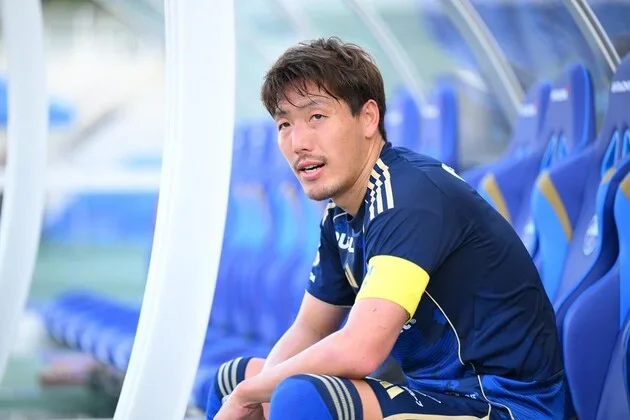
Masato Shoji plays an immense role as Machida’s captain.
The AFC Champions League Elite (ACLE) might be a tournament where the real challenge begins after it ends. FC Machida Zelvia faced Al-Ahli (Saudi Arabia) in the ACLE final on April 25 (local time), losing 0-1 after a grueling battle that went into extra time. Looking back, that was the third match of a nine-game stretch.
Machida has handled this intense run of games remarkably well. In the seven matches already played, they have not lost a single one within 90 minutes. After returning home, they have earned nine points from four matches (two wins, one penalty win, and one penalty loss), keeping pace with league leaders Kashima Antlers and second-placed FC Tokyo.
While the contributions of the manager, coaches, and conditioning staff are significant, the players—led by captain Masato Shoji—deserve the most praise.
Machida returned from their 15-day Saudi Arabia trip on the afternoon of April 27. They stayed in Chiba Prefecture on the 28th to adjust, then faced Mito Hollyhock away on the 29th. On paper, it was three days later, but the final ended around 4 a.m. Japan time on the 26th, meaning it was actually just 58 hours before the next match. Many players were reportedly sleep-deprived, as the second and third days after return are the toughest for jet lag adjustment.
Yet Machida managed a 2-2 draw (4-3 on penalties) against Mito. They then continued through a punishing run: against Kashima Antlers on May 3 (1-1, 2-4 on penalties), Yokohama F. Marinos on May 6 (2-0 win), and JEF United Chiba on May 10 (2-0 win). Up next are Tokyo Verdy on May 13 and Kawasaki Frontale on May 17.
In soccer, a “consecutive match” situation is defined as two or more games per week or games with three or fewer days between them. Machida played three matches in Saudi Arabia: the ACLE final stage quarterfinal against Al-Ittihad (1-0 win) on April 18, the semifinal against Shabab Al-Ahli (1-0 win) three days later, and the final against Al-Ahli Saudi FC (0-1 loss) three days after that. After returning, they had effectively two days before Mito, three days before Kashima, two days before Yokohama FM, and three days before Chiba, with two days before Tokyo V and three days before Kawasaki still to come.
Compared to Vissel Kobe, who also returned from Saudi Arabia and slumped with three points, one goal scored, and nine conceded in four matches, Machida’s strong performance is clear.
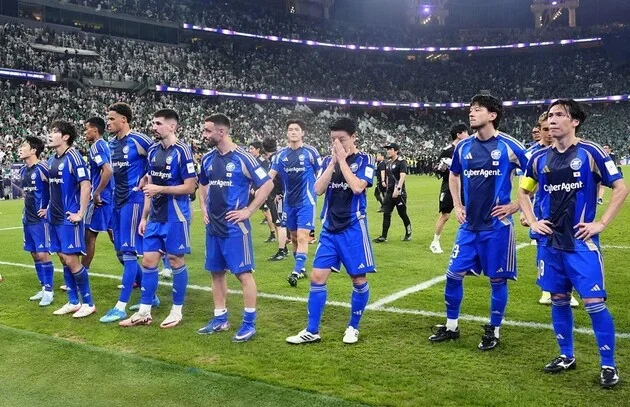
Machida played three ACLE final matches in Saudi Arabia and immediately entered a dense schedule after returning home.
In the Chiba match, they took a two-goal lead in the first half and controlled the game in the second half for a convincing victory. Key players like Yuki Soma, Yuta Nakayama, and Neta Lavi were sidelined due to injuries before or during the long run, so it wasn’t a full-strength lineup. But this Machida side shows resilience, grinding out results even under tough circumstances.
First, they have squad depth and tactical understanding to rotate players effectively. The Mito match saw ten changes from the ACLE final lineup, yet they still secured two points. Only two new signings were made this season—Tete Yengi and Fumiya Tokumura—both of whom have contributed significantly. Tokumura, a high school graduate rookie, has started three of the four matches since returning and is pushing for a regular spot at left wing-back.
But when speaking to the players, another reason emerges. Shoji said after a match:
“I think our squad depth might be thicker than other teams. Also, this time due to the war situation, the Saudi teams played consecutive matches before facing us in the quarterfinals, right? We won, but even though they played extra time and then faced us after two days, they still had solid technique and something special. Now we’re playing every two or three days—it’s tough, but if we get worn out here, we can’t beat them. We’re winning, but we were taught a lesson… Honestly, that experience has been valuable.”
Hiroyuki Mae added:
“After going all the way to the final and losing, we feel both a sense of loss and a sense of urgency—there’s no point unless we keep pushing from here. When I think about what it takes to get back to that stage, winning the league this season might be difficult points-wise, but we have to keep building on our progress. I feel we’re continuing to work hard to become stronger and a better team.”
Machida won the 2025 Emperor’s Cup and earned the title of “Asia’s runner-up,” but their best league finish is third. The players aim higher and returned from Saudi Arabia with an increased hunger.
They didn’t allow themselves a break after returning. Instead, they smoothly switched their mindset to fighting through consecutive matches and aiming for the highest possible finish in the J1 league. This mentality is a major reason for their strong performance.